Friday, 10 May 2024

¿How to and why generate a low cost cloning voice?

Translator

Cloning voice for old computers


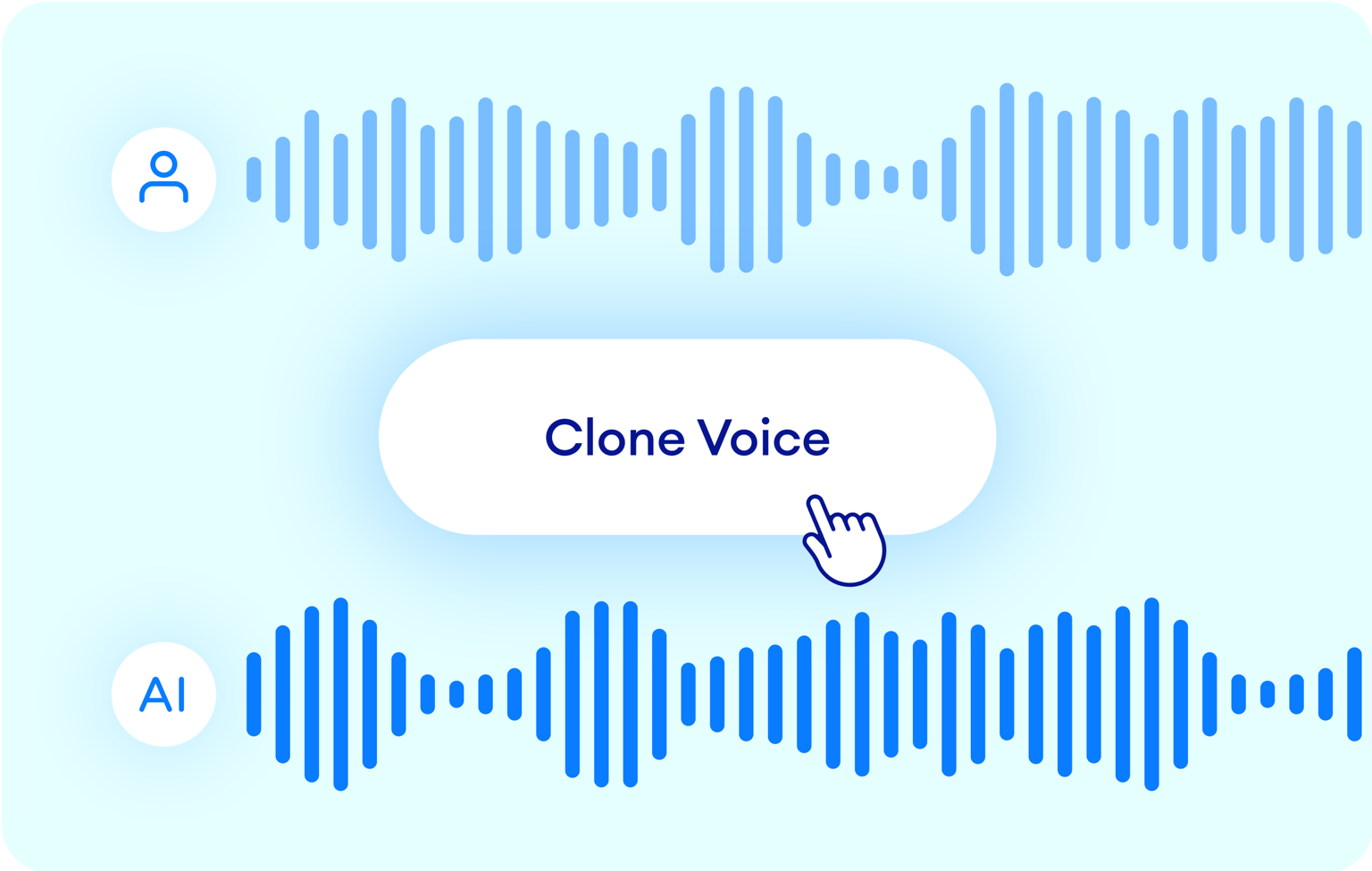
 Voice cloning is a process that is commonplace in our daily lives. But for to sideload it is necessary to clone the voice to give realism to our avatar and a more natural ability to communicate. Nowadays, the best programs need only twenty seconds of voice recording to clone, including intonation and accent, any human voice realistically and use it as the basis for a text-to-speech engine. Because the verbal production in the avatar is textual and has to be read aloud to communicate with its interlocutor.

But there is a catch, most computers on which to simulate the avatar have limited information processing capacity and this requires other, less demanding strategies, as neural networks are very expensive programs in this respect.

And sometimes what is old but good is still valid. Early TTS used sampling and mixing, i.e. extracting samples of word pairs and their associated sound and then remixing them to a text input to the system, resulting in a monotonous, robotic but recognizable human voice.

Low-TTS is of that nature, the user will have to add his vocabularies day by day until it meets his needs as much as possible.


Meanwhile, we continue to investigate realistic voice cloning at low cost to obtain a satisfactory solution.

Source: https://github.com/marcobaturan/Low-Cost-TTS

How to detect non-verbal emotions?

Translator


Hey! Look and feel


This subproject of the human data extraction framework in sideload is used to read through the webcam the emotions expressed by a human face in a specific situation. This allows the emotions to be recorded and stored in a database. It is complemented by the other sub-functions of the program to make a complete and comparative record of all stimulus and response processes of an individual.
For example, it can be linked to the detection of the heartbeat by the camera and thus link the heartbeat to the emotions and stimuli displayed on the screen. Thus achieving a more realistic representation of the person.


 Source of component:

https://github.com/marcobaturan/Non-verbal-language-and-emotions

Related with:

https://side-load.blogspot.com/2024/05/detection-of-cardiac-pulse-by-webcam.html

Detection of cardiac pulse by webcam.

Translator
Translator


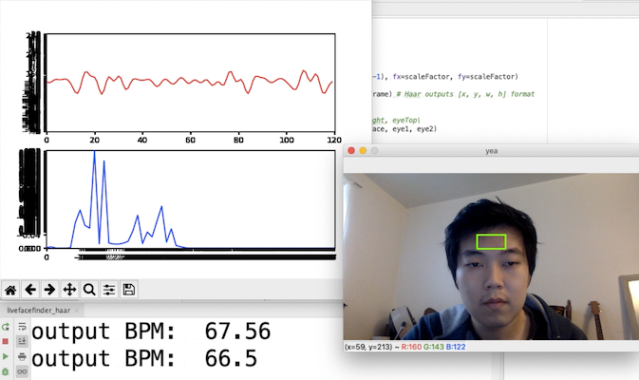
Look at my forehead: bum-bum, bum-bum ...


Within the framework developed for recording human data to generate to sideload, a webcam application was programmed to accurately detect the pulse in real time.

The reason for capturing this biometric data is to be able to store it and compare it with other input data that can be used to make deductions about the essence of a person and to be able to improve its computational reconstruction.
For example, how their heart reacts to music, images, messages or certain situations. Allowing the logical correlation to be established in its most probable context and to be appropriately simulated by the computer model. This would allow giving the program reactive processes and bodily sensations to stimuli, in short: to feel things.
A Gemini-generated explanation of the source article explaining this algorithm: ## Article summary: Heart rate detection using a camera

The article discusses heart rate detection using a camera. The challenges of detecting heart rate with the naked eye are discussed. A solution using Eulerian Video Magnification (EVM) is proposed. This technique amplifies subtle changes in the video, allowing heart rate variations to be seen in colour. The authors describe the process in detail, including the use of spatial and temporal filtering. They also discuss the implementation and possible applications of this technology.

Key points:** Key points:** Key points:** Key points

* Heart rate detection with the naked eye is challenging due to the subtle colour changes involved.
* EVM can be used to amplify these colour changes, making heart rate detection easier.
* The authors propose a method for heart rate detection using EVM that includes spatial and temporal filtering.
* This technology has the potential to be used in a variety of applications, such as healthcare and wellness.

Fuente: https://medium.com/intel-software-innovators/heartrate-detection-using-camera-d34b3289e272

repository hosting the application: https://github.com/marcobaturan/HeartRateCam

Trending

Practical Guide to Pet Sideloading: Preserving Your Companion's Essence

AI technology allows us to reconstruct the personality of living beings from their digital footprint. This concept, known as "sideload...

popular